What Is Neuroplasticity?
The Brain's Ability to Adapt
For most of medical history, the brain was considered fixed. Once neurons were damaged (whether from injury, disease, or developmental differences) the loss was considered permanent.
That understanding has fundamentally changed.
Neuroplasticity is the brain’s ability to reorganise itself by forming new neural connections, strengthening existing pathways, and adapting its structure in response to experience, learning, injury, and therapeutic input. It is not a process that stops in childhood — it continues throughout life, although it is most active in the early years.
In simple terms: the brain is not hardwired.
It is a dynamic system that changes in response to what it experiences — and that capacity for change is what makes recovery possible.
How neuroplasticity works?
The brain contains billions of neurons connected through synapses — the junctions where signals pass between nerve cells. Every time a signal travels along a neural pathway, that pathway is slightly strengthened. Pathways used repeatedly become more efficient. Pathways that fall out of use weaken over time.
This is sometimes summarised as “neurons that fire together, wire together” – a principle first described by neuropsychologist Donald Hebb in 1949 and confirmed across decades of research since.
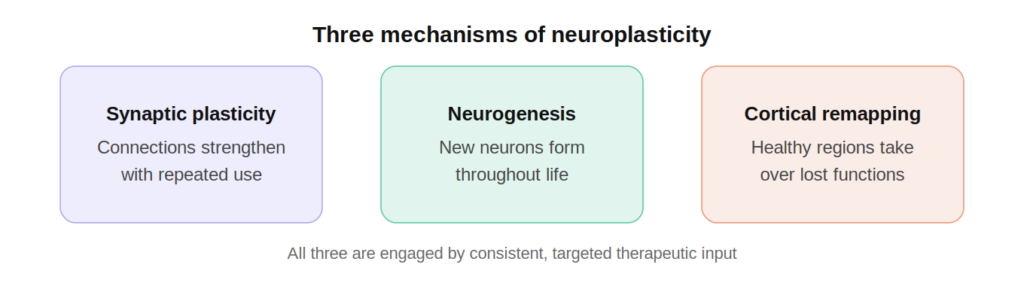
Three mechanisms drive neuroplasticity:
- Synaptic plasticity.
The strength of connections between neurons changes based on activity. Repeated stimulation strengthens synapses; disuse weakens them. This is the foundation of learning, memory, and skill acquisition.
- Neurogenesis.
In specific brain regions, particularly those involved in memory, new neurons can form throughout adulthood. This was considered impossible until the late 20th century.
- Cortical remapping.
Following injury, the brain can reassign functions from damaged areas to healthy ones. This is observed after stroke and traumatic brain injury — and is the neurological basis for rehabilitation.
In simple terms:
neuroplasticity is not one single process. It is a collection of overlapping mechanisms through which the nervous system continuously adapts.
Why neuroplasticity matters for recovery?
Understanding neuroplasticity changes what we believe is possible after neurological events.
After a stroke, the damaged neurons cannot regenerate. But through neuroplasticity, surrounding tissue can be recruited to take over some of the lost functions. This reorganisation is what makes stroke rehabilitation effective — and why the timing, consistency, and intensity of that rehabilitation directly affects outcome.
A 2025 analysis of neurological rehabilitation research confirmed that interventions specifically targeting neuroplasticity mechanisms produced measurably better outcomes than passive recovery alone.
The same principle applies across a wide range of conditions:
Speech and language development.
In young children, the brain is forming its language pathways at the fastest rate it ever will. The neural connections between understanding and speaking are still actively developing. Therapeutic input during this window can meaningfully shape how those pathways form — which is why early intervention consistently produces better outcomes. See our article on speech delay in toddlers and sensory processing in children for more on this.
Traumatic brain injury.
After a traumatic brain injury, the brain may need to rebuild and reorganize neural pathways involved in movement, memory, speech, attention, and emotional regulation. Recovery often happens gradually through repetition, rehabilitation, and consistent therapeutic input over time. Because neuroplasticity plays a central role in this process, the environment surrounding recovery — including sleep, stress levels, sensory stimulation, and rehabilitation consistency — may significantly influence how the nervous system adapts. See our article on traumatic brain injury rehabilitation for more on this.
Stroke recovery.
Neuroplasticity is the core mechanism of post-stroke rehabilitation. The speed and quality of recovery is directly linked to how effectively the brain is supported in remapping its functional networks. See our stroke recovery support page for more.
Cerebral palsy.
CP involves disrupted communication between brain and body through central and peripheral pathways. Research drawing on over 1,000 cases has explored how targeted therapeutic approaches may support brain plasticity and motor development by influencing the neurotrophic factors involved in synaptic remodelling. See our cerebral palsy support page for more.
Parkinson’s disease.
While Parkinson’s disease involves progressive neurodegeneration, neuroplasticity-informed interventions have been associated with improvements in motor symptoms, gait, and quality of life across multiple reviewed studies.
In simple terms:
neuroplasticity is not a cure. It is the mechanism through which the nervous system responds to therapeutic input — and understanding it explains why rehabilitation works, and why consistency matters.
The role of BDNF
One of the key proteins driving neuroplasticity is brain-derived neurotrophic factor -> BDNF.
Think of it as fertiliser for the brain. BDNF supports the survival, growth, and differentiation of neurons, and plays a central role in synaptic plasticity and recovery following neurological injury.
BDNF levels are influenced by physical exercise, sleep quality, chronic stress, and therapeutic interventions. When BDNF expression is elevated, the conditions for neuroplasticity are more favourable. When it is chronically low — as happens under chronic stress, sleep deprivation, and certain neurological conditions — the brain’s capacity for adaptation is diminished.
For a parent of a child with speech delay, this means the conditions during therapy matter – the child’s regulation state, sleep quality, and stress levels directly affect how well their nervous system can form new connections. The environment for neuroplasticity is not just about the treatment itself.
The window of opportunity
Neuroplasticity is highest in early childhood, when the brain is forming its fundamental architecture at the fastest rate. This is why early intervention in developmental conditions consistently produces better outcomes.
The neuroplastic window of early childhood is also the period when sensory processing patterns are being established — which is why early identification matters so much.
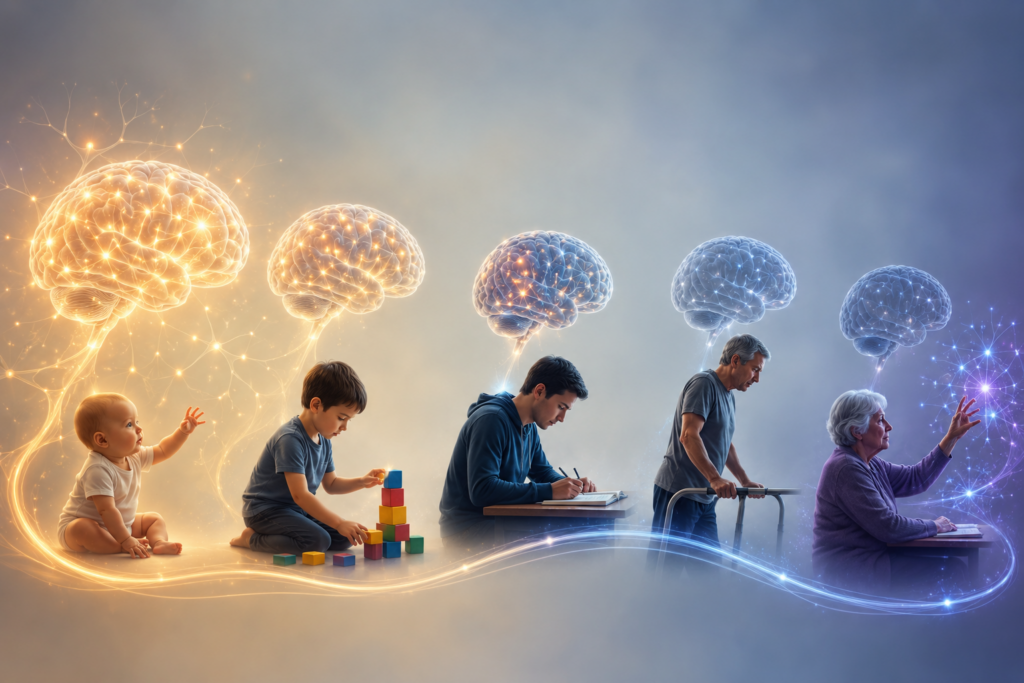
The window is not closed after childhood. Adult neuroplasticity is real and well-documented. But it requires more sustained, targeted input to activate. For adults navigating stroke recovery, chronic pain, or neurodegenerative conditions, the practical implication is this: consistent therapeutic input over a sufficient period is what engages neuroplasticity. The nervous system adapts gradually, and that adaptation requires time.
What supports neuroplasticity
Several evidence-informed approaches have been shown to engage neuroplasticity mechanisms:
Neuro-acupuncture.
A 2025 analysis of 20 years of published acupuncture research identified neuroplasticity as the most active research frontier in the field. A separate 2025 study using neuroimaging mapped how acupuncture produces measurable changes across multiple brain networks — including areas governing sensorimotor function and pain regulation. Neuro-acupuncture is specifically designed to engage neuroplasticity mechanisms through targeted stimulation of neural pathways and BDNF expression — used as a complementary approach alongside other rehabilitation therapies.
Physical rehabilitation and movement.
Exercise increases BDNF expression and promotes neurogenesis. Structured physical rehabilitation after neurological injury directly activates cortical remapping.
Speech and language therapy.
Repetitive, targeted language input strengthens the neural pathways involved in language processing – the most direct clinical application of neuroplasticity principles in developmental care.
Cognitive engagement.
Novel learning and mentally demanding activity stimulate neuroplasticity in adults. The brain adapts to what it is asked to do.
Sleep.
Deep sleep is when the brain consolidates the neural changes formed during waking activity. Chronic sleep disruption directly impairs neuroplasticity — which is why sleep quality is a clinical consideration in any neurological rehabilitation plan.
Frequently asked questions
Neuroplasticity is the brain's ability to reorganise itself by forming new connections and strengthening existing pathways. It means the brain is not fixed, it adapts continuously in response to experience, learning, injury, and therapeutic input. This capacity for change is what makes recovery from neurological conditions possible.
Yes, not by regenerating lost neurons, but through neuroplasticity. After injury or stroke, healthy brain regions can be recruited to take over functions previously handled by damaged areas. This process, called cortical remapping, is the neurological basis for rehabilitation and explains why consistent therapeutic input after brain injury produces better outcomes.
The three main mechanisms are synaptic plasticity — where connections between neurons strengthen with repeated use and weaken without it; neurogenesis — where new neurons form in specific brain regions including those involved in memory; and cortical remapping — where healthy regions of the brain reassign functions from damaged areas following injury or stroke.
Research suggests it may. A 2025 analysis of 20 years of published research identified neuroplasticity as the most active research frontier in acupuncture science. Neuro-acupuncture is specifically designed to engage neuroplasticity mechanisms through targeted stimulation of neural pathways and BDNF expression, used as a complementary approach alongside physiotherapy, speech therapy, and other rehabilitation, not as a replacement.
Neuroplasticity is the core mechanism behind all stroke rehabilitation. After a stroke, the brain cannot regenerate the neurons that were lost — but through cortical remapping, surrounding healthy tissue can gradually take over some of the lost functions. The timing, consistency, and quality of therapeutic input directly determines how effectively this process occurs.
💡 Remember
Recovery is not a straight line. There will be good days and challenging days. What matters is consistent effort, appropriate support, and the courage to explore treatments that might help you reach your fullest potential. Neuroacupuncture is one more tool in your recovery toolkit—a tool backed by thousands of years of clinical experience and increasingly by modern research.
Scientific References
- Zhang et al. (2025). Global research hotspots and trends of acupuncture regulating neuroplasticity: bibliometric analysis 2005–2024. Frontiers in Neurology. doi.org/10.3389/fneur.2025.1615659
- Frontiers in Neuroscience (2025). Understanding the multifaceted brain mechanisms of acupuncture based on neuroimaging studies. doi.org/10.3389/fnins.2025.1643302
- Wang et al. (2024, corrected 2025). Neural circuit mechanisms of acupuncture effect. Frontiers in Neurology. doi.org/10.3389/fneur.2024.1576213
- Sun Z. et al. (2025). Acupuncture’s impact on hemiplegic gait recovery after stroke: systematic review and meta-analysis. Complementary Therapies in Medicine, 91:103181.
- Frontiers in Neurology (2025). Acupuncture combined with language training for aphasia in children with CP: systematic review with meta-analysis. doi.org/10.3389/fneur.2025.1502023
- Pediatric Neurology (2023). Efficacy of laser acupuncture for children with ASD: clinical, molecular, and biochemical study.
This article is for informational and educational purposes only and is not a substitute for professional medical advice, diagnosis, or treatment. Always seek the advice of your physician or other qualified health provider with any questions you may have regarding a medical condition. Never disregard professional medical advice or delay in seeking it because of something you have read in this article.
Table of Contents
About Denis Grounin →
Denis Grounin, former ER nurse practitioner, R.TCMP, R.Ac, is the Founder of Sunrise Neuro Acupuncture Integrative Clinic in Ottawa with over 30 years of acupuncture experience and neurological training since the 1990s. His work focuses on neuro-acupuncture, rehabilitation support, and integrative neurological care.
Learn more about integrative medicine
- All
- Gastrointestinal
- Infections
- integrative medicine
- Mental
- Musculoskeletal
- Neurological
- Skin
- Women's Health
How Common Are Sensory Processing Difficulties in Children?
Low Back Pain Treatment in 2026: What Research Now Shows
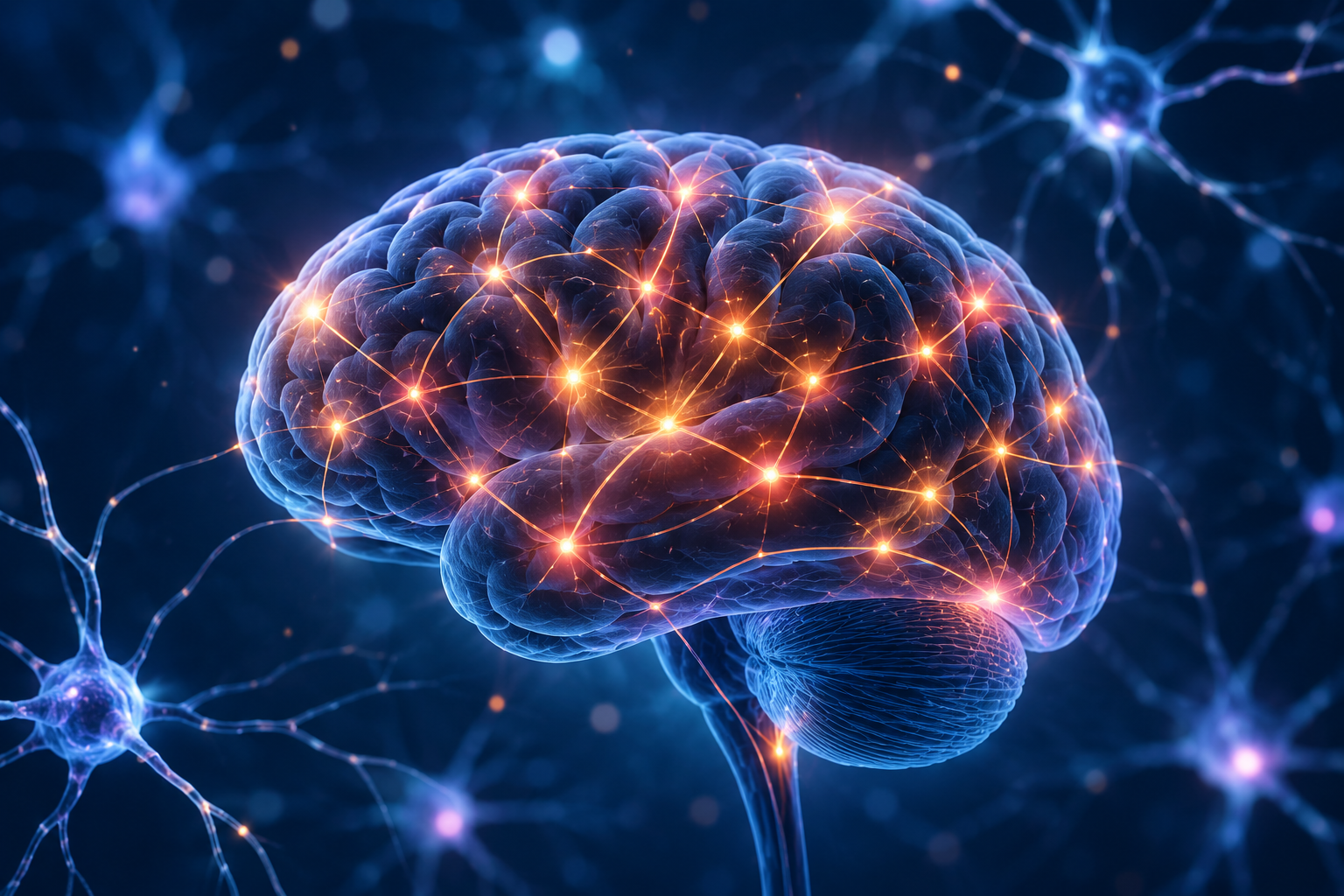
What Is Neuroplasticity? The Brain’s Ability to Adapt
Looking for a treatment?
Experience the benefits of Traditional Chinese Medicine with personalized care for your health.