
How Common Are Sensory Processing Difficulties? What Research Shows Globally, in Canada, and in Ontario
This article is a part of the Sunrise Sensory Processing series: Sensory Processing Support Ottawa · Sensory Processing in Children · Speech Delay and LLLT
If you have ever felt that your child’s sensory reactions seemed more intense than those of other children, that certain sounds, textures, or environments produced responses that felt disproportionate to the situation, you are not alone. And you are not imagining it.
Sensory processing difficulties are significantly more common than most parents realize. They are not rare edge cases. They are a documented neurological variation that researchers have been studying for decades, and the prevalence data tells a consistent story across countries, populations, and research methodologies: a meaningful proportion of all children experience some degree of sensory processing difference, and in children with neurodevelopmental conditions, the numbers are considerably higher.
This article brings together the current best evidence on how common sensory processing difficulties actually are globally, in Canada, in Ontario, and specifically in the context of conditions like Autism Spectrum Disorder, ADHD, and speech delay , and why these numbers matter for families in Ottawa navigating assessment and support.
What Are Sensory Processing Difficulties?

Before looking at the numbers, it is worth being precise about what is being measured.
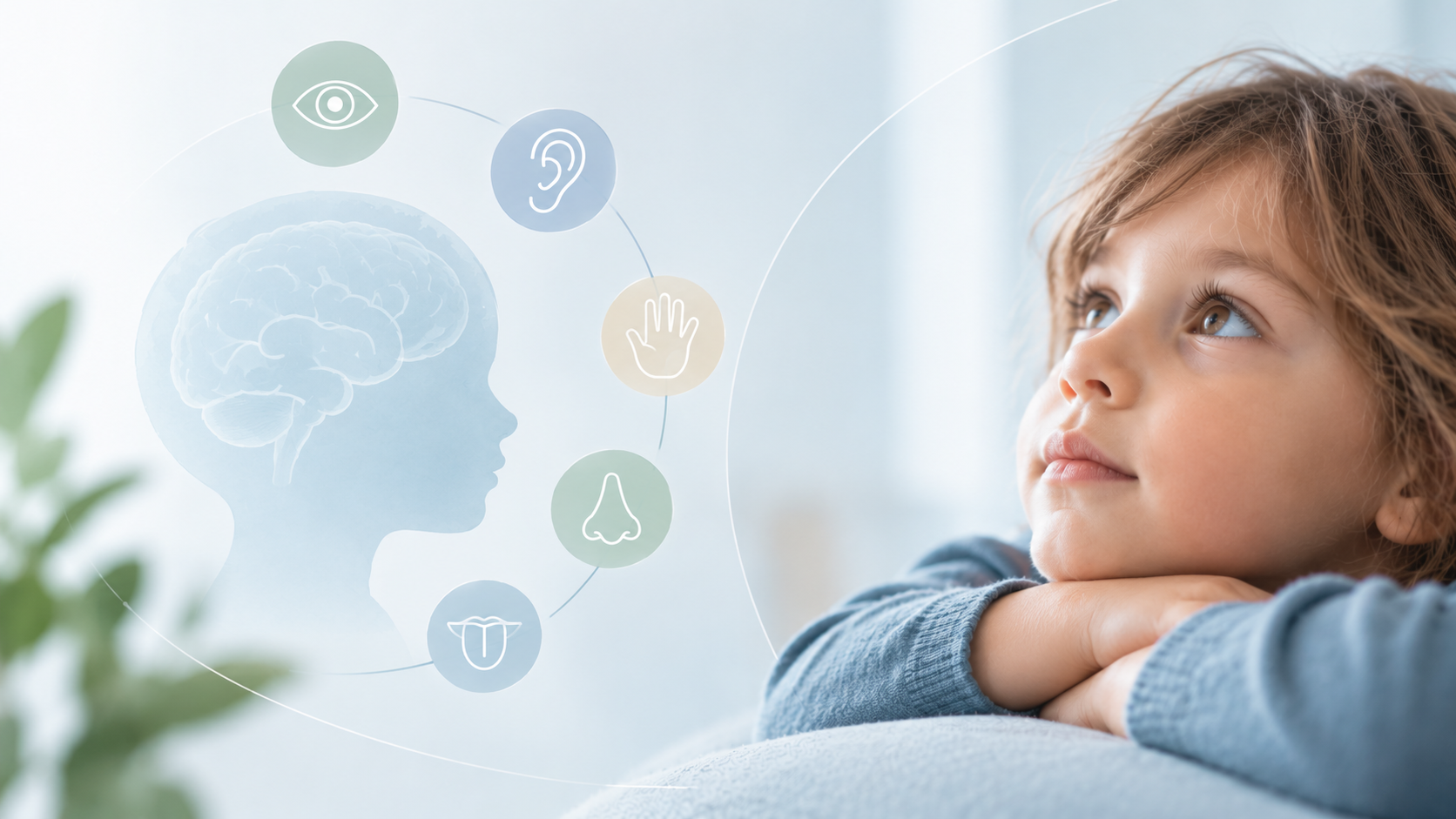
Sensory processing refers to how the brain receives, organizes, and responds to information from the body and the environment. When this process works differently than expected — when the brain over-responds, under-responds, or has difficulty integrating input from multiple sensory channels simultaneously — the result is what researchers call sensory processing differences or difficulties.
These differences are not a single condition with a single presentation. A child who cannot tolerate the sound of a hand dryer and a child who seeks intense physical pressure are both experiencing sensory processing differences — but in opposite directions. This range is one reason prevalence estimates vary significantly across studies.
For a full explanation of what sensory processing is and how it presents in children, see our educational guide: Understanding Sensory Processing in Children.
Global Prevalence: What the Research Shows
Prevalence estimates for sensory processing difficulties vary depending on the methodology used, the population studied, and how “sensory processing difficulty” is defined and measured. That variability reflects genuine differences in research design, not unreliability in the findings.
In typically developing children — without a known neurodevelopmental diagnosis — research estimates that 5 to 16% experience sensory processing difficulties significant enough to affect daily functioning, according to a 2025 systematic review in the Early Childhood Education Journal.
A 2025 study published in Children reported that an estimated 12 to 20% of children exhibit atypical sensory processing requiring specific strategies to support their daily activities.
A large Danish population study examining 1,723 primary school children found that 21% had sensory processing scores indicating significant difficulties, with boys more likely than girls to be identified — consistent with European studies in Spain and other countries.
Research from the STAR Institute for Sensory Processing Disorder — one of the primary US research centres for SPD — places the figure at 5 to 16% of school-aged children.
Reported prevalence in typically developing children
In children with neurodevelopmental conditions, the numbers rise substantially. A 2025 systematic review found that sensory integration and processing differences are estimated to affect 5 to 25% of children generally — but that prevalence is significantly higher in clinical populations including children with ASD, ADHD, fetal alcohol spectrum disorder, and Down syndrome.
Across studies, atypical sensory processing is reported in prevalence rates ranging from 20% to 95% in children with neurodevelopmental disorders, depending on the condition and methodology.
Sensory Processing in Canada —
What the Data Shows
There are currently no published national prevalence studies specific to sensory processing disorder in Canada as a standalone condition. However, the conditions most closely associated with sensory processing difficulties — ASD and ADHD — have been rigorously tracked at the national level, and the Canadian numbers tell a clear story.
Autism Spectrum Disorder in Canada
According to the 2019 Canadian Health Survey on Children and Youth, 1 in 50 (or 2.0%) Canadian children and youth aged 1 to 17 years were diagnosed with ASD. Males were diagnosed approximately four times more frequently than females. Just over half (53.7%) were diagnosed before the age of five. Over two-thirds (68.7%) had another long-term health condition, with ADHD, learning disability, and anxiety disorder being the most common.
Source: Public Health Agency of Canada
The 2023 Canadian Health Survey on Children and Youth found that ASD prevalence among Canadian children aged 1 to 17 years increased from 2.0% in 2019 to 3.0% in 2023.
Source: Health Canada — Chronic Conditions in Childhood
According to the Canadian Chronic Disease Surveillance System, autism prevalence estimates among children and youth rose from 1 in 714 in 2000–2001 to 1 in 44 in 2023–2024. The rate of newly identified autism cases also increased from 35 per 100,000 children and youth to 365 per 100,000 over the same period.
Source: Canadian Chronic Disease Surveillance System via Public Health Agency of Canada
In the 2022 PHAC report, autism prevalence among children ranged from 0.8% in Saskatchewan to 4.1% in New Brunswick, with a national average of 2.0%.
Source: Canadian Journal of Public Health, 2025
Since sensory processing differences are present in the majority of children with ASD, and given that ASD now affects an estimated 1 in 44 Canadian children and youth, a number that has risen dramatically and continues to increase, the number of Canadian children experiencing sensory processing difficulties alongside ASD alone is significant and growing year over year.
ADHD in Canada
The 2023 Canadian Health Survey on Children and Youth found that ADHD prevalence among Canadian children aged 1 to 17 years increased from 6.7% in 2019 to 8.4% in 2023, making it the most common diagnosed long-term condition in Canadian children.
Source: Health Canada — Chronic Conditions in Childhood
An Ontario-specific population study found that ADHD prevalence in children and youth aged 1 to 24 years increased from 5.29 per 100 in 2014 to 7.48 per 100 in 2021, with males showing higher rates than females.
Source: Butt et al., Canadian Journal of Psychiatry, 2024
A review of Canadian ADHD prevalence estimates found a national rate of 8.6% in children and youth across five provinces, consistent with the Canadian Psychological Association’s estimate of 5 to 8% of school-aged children.
Source: PubMed — Canadian ADHD Prevalence Review
Given that a 2025 meta-analysis in the Journal of the American Academy of Child and Adolescent Psychiatry, screening 10,750 references and including 30 studies with 5,374 participants — confirmed that children with ADHD present with significantly more severe sensory processing atypicities than controls across multiple domains, the 8.4% of Canadian children with diagnosed ADHD represents a large population where sensory processing difficulties are likely co-occurring but frequently unidentified.
Sensory Processing in Ottawa —
What Families Here Are Navigating
Ontario follows the national Canadian trends closely. Ontario-specific data for ASD and ADHD — the two conditions most associated with sensory processing difficulties — shows the same upward trajectory seen nationally.
ADHD prevalence in Ontario children and youth aged 1 to 24 years increased from 5.29 to 7.48 per 100 population between 2014 and 2021. Males had higher prevalence rates than females across the entire period.
Source: Butt et al., Canadian Journal of Psychiatry, 2024
For Ontario families, the practical implication of these numbers is not abstract. The rise in ASD and ADHD diagnoses in Ontario has not been matched by a proportional increase in publicly funded occupational therapy capacity. Waitlists for OT assessment through OCTC (Ottawa Children’s Treatment Centre) and other publicly funded services in Ottawa currently stretch to 12 to 18 months in many cases.
This means that for a meaningful proportion of Ontario children whose sensory processing difficulties are associated with a diagnosis of ASD or ADHD — or who are still in the assessment process — there is a significant window between when difficulties are first noticed and when formal therapeutic support begins.
Understanding what integrative support options are available in Ottawa during that window is the practical reason this data matters for local families. Our sensory processing support page covers what that looks like at our Westboro clinic — including scalp acupuncture, neuro-acupuncture, and a completely needle-free laser acupuncture option for children who are touch-sensitive.
Sensory Processing in the USA —
A Comparison

The United States has more extensive sensory processing research infrastructure than Canada, and the numbers are consistent with international estimates.
The STAR Institute for Sensory Processing Disorder estimates that sensory processing difficulties affect 5 to 16% of school-aged children in the United States.
A 2025 study published in Children estimated that 12 to 20% of US children exhibit atypical sensory processing requiring specific adaptive strategies in daily life.
The CDC’s ADDM Network report estimated that 1 in 36 US children aged 8 years had been identified with ASD as of 2020 — slightly higher than current Canadian estimates of 1 in 44, reflecting differences in surveillance methodology rather than true prevalence differences.
ADHD affects an estimated 9.4% of US children aged 2 to 17 years according to CDC data — comparable to Canada’s 8.4% figure from the 2023 Canadian Health Survey.
The US and Canadian data, taken together, suggest a consistent picture: sensory processing difficulties affect approximately 1 in 7 to 1 in 5 children in the general population, rising to the majority of children with ASD and a significant proportion of children with ADHD.
Sensory Processing Difficulties in Autism Spectrum Disorder
Of all neurodevelopmental conditions, the relationship between ASD and sensory processing difficulties is the most extensively documented — and the only one where sensory differences are formally embedded in the diagnostic criteria under the DSM-5.
A 2024 observational study published in Brain Sciences examining 614 children aged 3 to 14 years found that children with neurodevelopmental disorders — including ASD — exhibited significantly more sensory processing difficulties than typically developing controls, with prevalence in conditions affecting neurodevelopment ranging from 40 to 90%.
A 2024 study in Children specifically examining preschool-aged children with neurodevelopmental disorders reported atypical sensory processing in 39.7% of the total NDD sample, rising to 44.4% in the ASD subgroup — with the ASD group showing specific vulnerability in proprioceptive and vestibular input processing.
For families in Ottawa whose children have received or are pursuing an autism spectrum disorder diagnosis, sensory processing assessment is a critical parallel consideration — not a secondary one.
Sensory Processing Difficulties in ADHD
The relationship between ADHD and sensory processing is less widely known than the ASD connection — but the research is becoming increasingly clear and consistent.
A 2025 meta-analysis in the Journal of the American Academy of Child and Adolescent Psychiatry — the largest analysis of sensory processing in ADHD to date, screening 10,750 references and including 30 studies with 5,374 participants — found that children and adults with ADHD presented with significantly more severe sensory atypicities than control groups across multiple domains, including sensory sensitivity and sensory seeking.
Sensory difficulties in ADHD are frequently overlooked — overshadowed by attention and hyperactivity presentations that are more visible in classroom and home settings. A child who struggles to concentrate in a noisy classroom, or who cannot settle because of the texture of their school uniform, may be identified as inattentive or oppositional when the underlying driver is sensory dysregulation.
For Ottawa families navigating ADHD assessment and support, this is worth knowing: sensory processing differences may be co-occurring even when they have not been formally identified — and addressing them may support the effectiveness of other ADHD interventions.
Sensory Processing Difficulties and Speech Delay
The overlap between sensory processing difficulties and speech and language delays is an area of growing research interest — and one particularly relevant for Ottawa families whose children present with both.
Multisensory integration — the brain’s ability to combine information from more than one sensory channel simultaneously — is critical for language development. Children who struggle to filter out background noise, or who are easily overwhelmed by the sensory demands of a classroom or therapy room, may have less attentional and neurological capacity available for the language processing that speech development requires.
This is one reason that sensory processing support and speech-language therapy are increasingly understood as complementary rather than separate interventions. We cover the evidence for this connection in more depth in our article on Speech Delay and Low-Level Laser Therapy.

Why the Numbers Vary So Much
A parent reading that sensory processing difficulties affect “5 to 25% of children” might wonder what to make of that range. The variability has several legitimate sources:
Different assessment tools produce different numbers. The Sensory Profile, the Sensory Processing Measure, and the Short Sensory Profile all use different normative samples, cut-off criteria, and informants.
Population samples differ. Studies from clinical referrals show higher prevalence than general school population studies. Neither is wrong — they measure different things.
Definitions differ. A mild texture preference and severe sensory dysregulation that limits daily participation are both “sensory processing differences” under a broad definition. Stricter clinical thresholds produce lower prevalence estimates.
There are no Canadian-specific sensory processing prevalence studies. The data available comes primarily from the United States, Europe, and Asia. The absence of country-specific Canadian data is a genuine gap in the literature — not a reason to discount the international findings, but worth noting honestly.
Why Early Identification Matters
Across all the research, one finding is consistent: early identification is associated with better outcomes.
Neuroplasticity — the brain’s capacity to reorganize and form new connections — is highest in early childhood. This is the same window in which sensory processing patterns are being established and in which intervention has the greatest potential to support more adaptive nervous system organization.
A child whose sensory processing difficulties are identified and supported at age three is in a significantly better position than one whose difficulties are recognized at age eight — not because the nervous system stops changing, but because the early window offers more neurological flexibility.
This is why the OT waitlist problem in Ottawa matters so much clinically. Months spent waiting are months of the neuroplastic window not being used.
What This Means for Ottawa and Ontario Families
If these numbers reflect your family’s experience — if your child’s sensory reactions have seemed more intense, more persistent, or more limiting than you expected — this research suggests that what you are observing is neither unusual nor a parenting failure.
Sensory processing difficulties are common. They have a clear neurological basis. They respond to appropriate, individualized support. And early intervention — from whatever direction it comes — is consistently associated with better outcomes than waiting.
For Ottawa families exploring options right now:
- Our Sensory Processing Support Ottawa condition page covers our integrative clinical approach — including what a first appointment looks like, which treatments we use, and what families typically observe over a course of treatment.
- Our Sensory Processing in Children educational guide explains the neurological basis of sensory processing differences in plain language.
- For children with ASD, ADHD, or speech delay — our condition pages cover what integrative support looks like alongside each of those presentations specifically.
We offer neuro-acupuncture, scalp acupuncture, and a completely needle-free laser acupuncture option for children who are touch-sensitive. Every plan begins with a thorough individual assessment. No referral is required.
Summary Table
Sensory Processing Prevalence at a Glance
| Population | Estimated prevalence | Key source |
|---|---|---|
| Typically developing children (global) | 5–21% | Piller et al. 2025; Navarro-Soria et al. 2025; Jørgensen et al. 2021 |
| Children with ASD (Canada: 1 in 44) | 40–90% | Bottini et al. 2024 |
| Children with ADHD (Canada: 8.4%) | Significantly elevated vs controls | Jurek et al. 2025 |
| Children with other NDDs | 20–95% | Gigliotti et al. 2024 |
| ASD prevalence — Canada (2023–24) | 1 in 44 | PHAC / CCDSS 2024 |
| ADHD prevalence — Canada (2023) | 8.4% of children aged 1–17 | Health Canada CHSCY 2023 |
| ADHD prevalence — Ontario (2021) | 7.48 per 100 aged 1–24 | Butt et al. 2024 |
Full Series — Sensory Processing at Sunrise
Condition pages:
- Sensory Processing Support Ottawa →
- Autism Spectrum Disorder Support Ottawa →
- ADHD Support Ottawa →
- Speech Delay Support Ottawa →
- Pediatric Acupuncture Ottawa →
Educational articles:
- Sensory Processing in Children →
- Speech Delay and Low-Level Laser Therapy →
- What Is Neuroplasticity? →
Services used for sensory processing support:
Frequently asked questions
Neuroplasticity is the brain's ability to reorganise itself by forming new connections and strengthening existing pathways. It means the brain is not fixed, it adapts continuously in response to experience, learning, injury, and therapeutic input. This capacity for change is what makes recovery from neurological conditions possible.
Acute low back pain (under 6 weeks) is usually managed with activity modification, heat, and first-line treatments such as acupuncture, spinal manipulation, or short-term medication. Chronic low back pain (over 12 weeks) typically requires a more structured, multidisciplinary approach involving exercise, psychological therapies, and ongoing integrative care such as acupuncture.
Acupuncture is well-studied for general low back pain. For sciatica — where pain radiates down the leg, or there is numbness or weakness — a proper assessment is important first, since the cause may be different. We assess both at our Ottawa clinic and can help determine whether acupuncture is appropriate for your specific presentation. Learn more about how we approach sciatica.
💡 Remember
Recovery is not a straight line. There will be good days and challenging days. What matters is consistent effort, appropriate support, and the courage to explore treatments that might help you reach your fullest potential. Neuroacupuncture is one more tool in your recovery toolkit—a tool backed by thousands of years of clinical experience and increasingly by modern research.
Scientific References
- Piller A. et al. (2025). Systematic review of sensory-based interventions for children and youth (2015–2024). Frontiers in Pediatrics. View study →
- Mapes M. & Mitcheltree S. (2025). Managing Sensory Processing Disorders in an Early Childhood Classroom. Early Childhood Education Journal. View study →
- Jurek L. et al. (2025). Sensory Processing in Individuals With ADHD Compared With Control Populations: A Systematic Review and Meta-Analysis. Journal of the American Academy of Child and Adolescent Psychiatry, 64(10). View study →
- Navarro-Soria I. et al. (2025). Internalizing/Externalizing Problems and Sensory Processing Alteration in Children. Children, 12(6), 664. View study →
- Bottini S. et al. (2024). Sensory Processing Challenges in Children with Neurodevelopmental Disorders and Genetic Conditions. NeuroSci, 5(3). View study →
- Gigliotti F. et al. (2024). Atypical Sensory Processing in Neurodevelopmental Disorders: Clinical Phenotypes in Preschool-Aged Children. Children, 11(7), 875. View study →
- Jørgensen A.K. et al. (2021). Exploration of Sensory Processing Difficulties among Children Attending Primary School in Denmark. International Journal of Environmental Research and Public Health. View study →
- Public Health Agency of Canada. (2022). Autism Spectrum Disorder: Highlights from the 2019 Canadian Health Survey on Children and Youth. View report →
- Health Canada — Canadian Chronic Disease Surveillance System. (2026). Prevalence: Chronic conditions in childhood. View data →
- Butt D.A., Jaakkimainen L., Tu K. (2024). Prevalence and Incidence Trends of ADHD in Children and Youth in Ontario, Canada. Canadian Journal of Psychiatry. View study →
- Vaivada T. et al. (2022). A Review of Canadian Diagnosed ADHD Prevalence and Incidence Estimates. International Journal of Environmental Research and Public Health. View study →
- Daly B.P. et al. (2025). Prevalence and incidence of autism in children and adolescents in Manitoba, Canada. Canadian Journal of Public Health. View study →
This article is for informational and educational purposes only and is not a substitute for professional medical advice, diagnosis, or treatment. Always seek the advice of your physician or other qualified health provider with any questions you may have regarding a medical condition. Never disregard professional medical advice or delay in seeking it because of something you have read in this article.
Table of Contents

About Denis Grounin →
Denis Grounin, former ER nurse practitioner, R.TCMP, R.Ac, is the Founder of Sunrise Neuro Acupuncture Integrative Clinic in Ottawa with over 30 years of acupuncture experience and neurological training since the 1990s. His work focuses on neuro-acupuncture, rehabilitation support, and integrative neurological care.
Learn more about integrative medicine
- All
- Gastrointestinal
- Infections
- integrative medicine
- Mental
- Musculoskeletal
- Neurological
- Skin
- Women's Health
How Common Are Sensory Processing Difficulties in Children?

Low Back Pain Treatment in 2026: What Research Now Shows

What Is Neuroplasticity? The Brain’s Ability to Adapt
Looking for a treatment?
Experience the benefits of Traditional Chinese Medicine with personalized care for your health.