
Speech Delay and Low-Level Laser Therapy:
What Parents Should Know
Many parents exploring support options for speech delay eventually encounter emerging therapies such as Low-Level Laser Therapy (LLLT), also known as photobiomodulation (PBM).
While speech-language therapy remains the cornerstone of care for children with speech and language challenges, researchers have begun investigating whether light-based therapies may influence brain function, neuroplasticity, and neurological development in meaningful ways.
This article explores what researchers are currently studying, what remains uncertain, and how this approach may fit into a broader pediatric neurodevelopment support plan, without overstating what the evidence currently supports.
What Is Low-Level Laser Therapy?
Low-Level Laser Therapy, more precisely called photobiomodulation (PBM), is a non-invasive, non-thermal light-based intervention that uses specific wavelengths of red and near-infrared light to interact with biological tissue.
Unlike surgical or high-power lasers, LLLT does not cut or heat tissue. Instead, it delivers low-intensity light energy at wavelengths typically between 600 and 1100 nanometres — a range that can penetrate the skin and reach underlying tissues, including, when applied transcranially (to the scalp), certain regions of the brain.
The proposed mechanism centres on how light interacts with mitochondria — the energy-producing structures inside cells.
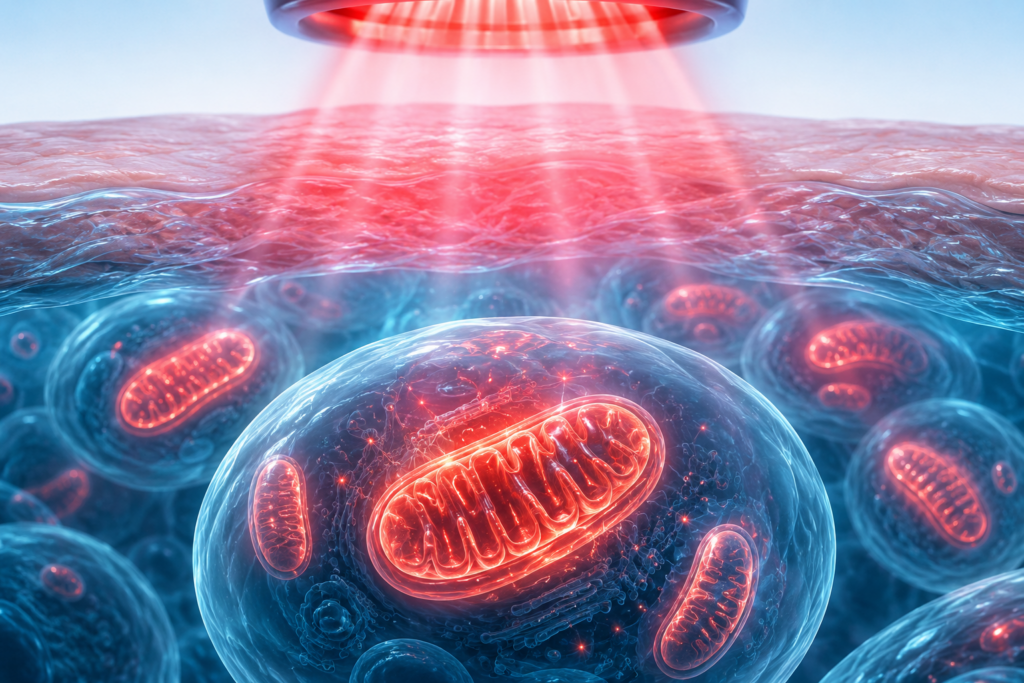
Research suggests that photobiomodulation may:
- Stimulate mitochondrial activity and increase cellular energy production (ATP).
- Reduce neuroinflammation in affected areas.
- Improve local blood flow and oxygen delivery to tissues.
- Support cellular repair and regeneration processes.
These mechanisms are supported by a growing body of laboratory and clinical research exploring PBM’s potential applications across a range of neurological and developmental contexts.
What remains less established is the degree to which these cellular effects translate into meaningful clinical outcomes — particularly for complex neurodevelopmental conditions such as speech delay.
Why Parents Are Interested in Emerging Approaches
Speech-language therapy remains the most established and evidence-supported foundation of care for children with speech and language challenges. That does not change with anything discussed in this article.
But parents navigating speech delay know that progress can be gradual, non-linear, and at times uncertain. Children develop at different rates, respond differently to intervention, and present with different underlying profiles. For many families, this naturally raises a question:
Is there anything else that might support my child’s development alongside the core therapeutic work?
That question is reasonable. And it is the same question that has led researchers to investigate a range of complementary approaches — including photobiomodulation, neuro-acupuncture, occupational therapy, and sensory-based interventions — not as replacements for speech-language therapy, but as areas that might support the neurological environment in which learning and communication development takes place.
This is the context in which photobiomodulation research should be understood. Not as a solution, but as an emerging area of scientific inquiry responding to a genuine need that many families feel.
Why Are Researchers Interested in Neurodevelopment?
Speech development is not a single, simple process. It depends on the coordinated function of multiple interconnected neural systems:
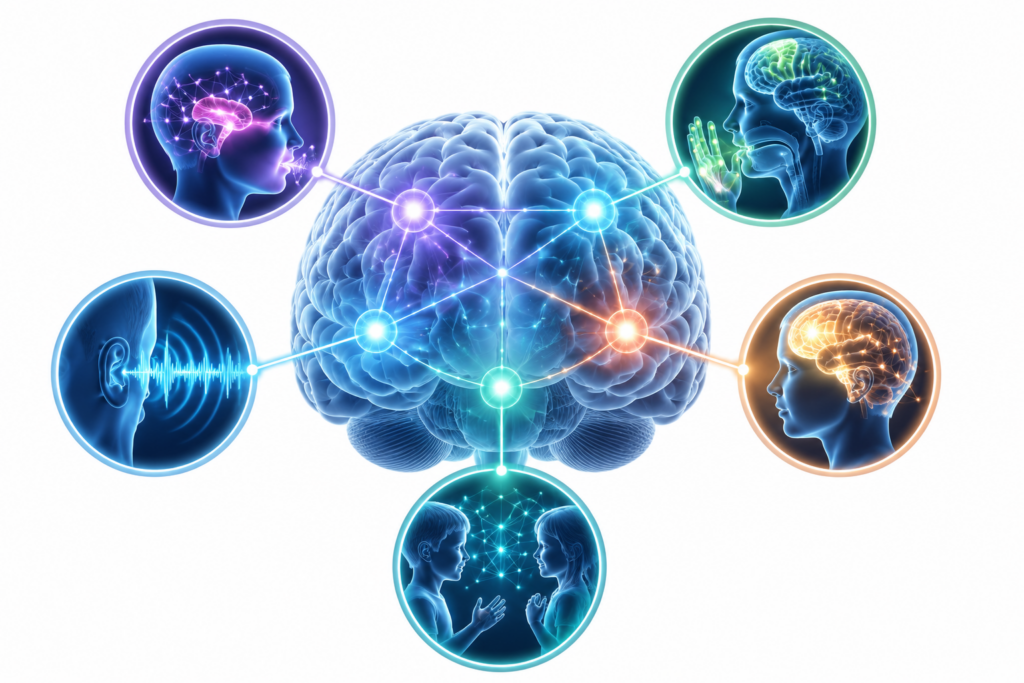
- Language networks
- Motor planning
- Auditory processing
- Attention and executive function
- Social communication
Each of these systems depends on the integrity and connectivity of neural pathways in the developing brain. And this is where the concept of neuroplasticity becomes central.
Neuroplasticity is the brain’s capacity to form new connections, reorganize existing ones, and adapt its structure and function based on experience and input. It is most pronounced in early childhood — precisely the window when speech and language development is most rapid, and when intervention is considered most effective.
Researchers studying photobiomodulation are exploring whether light-based stimulation of neural tissue might support the neuroplastic processes that underlie communication development and language acquisition. That question remains open, but it is the basis for ongoing investigation.
Why Early Intervention Matters
Research in developmental neuroscience consistently points to one conclusion: timing matters enormously in language development.
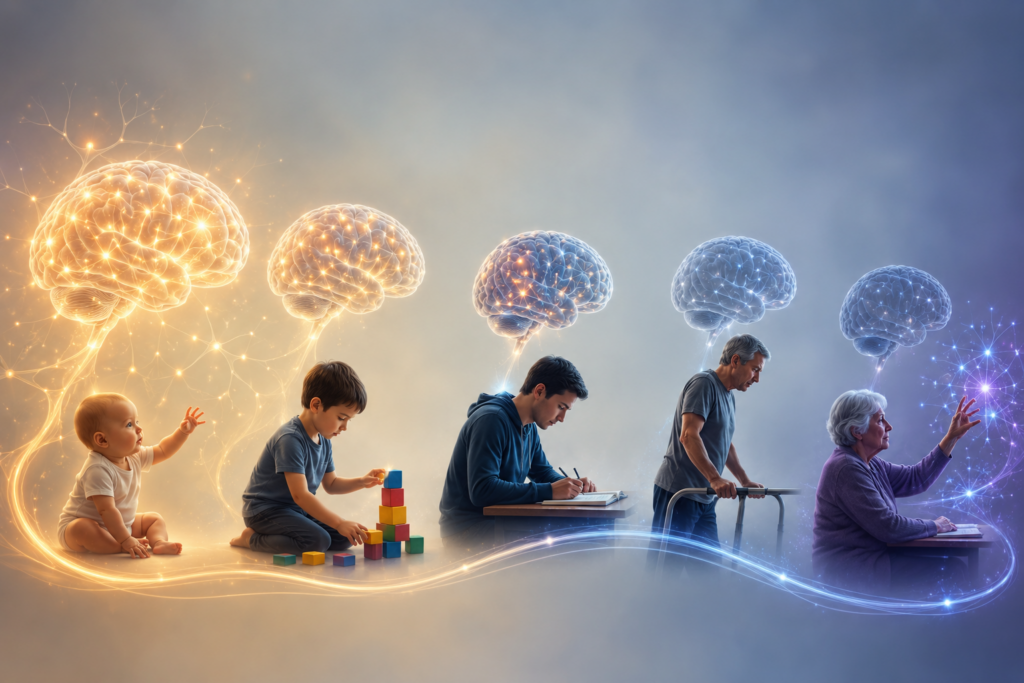
Neuroscientist Patricia Kuhl’s landmark work on brain mechanisms in early language acquisition demonstrated that infants are exquisitely sensitive to the sounds of their native language in the first months of life — and that this sensitivity is directly tied to the formation of neural pathways that underpin later speech and language skills. The window during which these pathways form most readily is early childhood, and it does not remain open indefinitely.
Studies on early intervention in children with hearing differences have similarly shown that children who receive targeted support earlier in development consistently demonstrate better language outcomes than those who receive equivalent support later. The mechanism is neuroplasticity — the brain’s capacity to adapt and reorganize is at its peak in the early years, and intervention that capitalises on this window tends to be more effective than the same intervention applied later.
What this means practically for families navigating speech delay:
Earlier assessment leads to earlier intervention — and earlier intervention leads to better outcomes on average.
The neuroplastic window is an asset — the same brain plasticity that allows delays to develop also allows for meaningful change with appropriate support.
No single approach captures all of this potential alone — which is why researchers continue to explore whether complementary approaches might further support the neurological environment in which language learning takes place.
This is the backdrop against which photobiomodulation research in neurodevelopment should be understood.
How Photobiomodulation May Influence the Nervous System
Research into transcranial photobiomodulation — that is, PBM applied through the scalp to reach brain tissue — has identified several mechanisms through which it may influence nervous system function. It is important to note that these are areas of active scientific investigation, not established clinical conclusions.
Cellular Energy Production
At the cellular level, researchers propose that near-infrared light interacts with cytochrome c oxidase, an enzyme in the mitochondrial respiratory chain. This interaction is thought to increase the production of adenosine triphosphate (ATP) -> the molecule that powers cellular activity. In neurons, which are among the most energy-demanding cells in the body, this could theoretically support function and resilience.
Blood Flow and Oxygen Delivery
Studies suggest that photobiomodulation may promote vasodilation and improve regional cerebral blood flow. Adequate blood flow and oxygenation are fundamental to normal brain function and to the metabolic processes that support neurological development in children.
Neuroplasticity
Several researchers have proposed that PBM may support neuroplastic processes by influencing growth factors — including Brain-Derived Neurotrophic Factor (BDNF), a protein that plays a key role in the formation, maintenance, and strengthening of neural connections. BDNF is closely associated with learning, memory, and language development.
Neuroinflammation
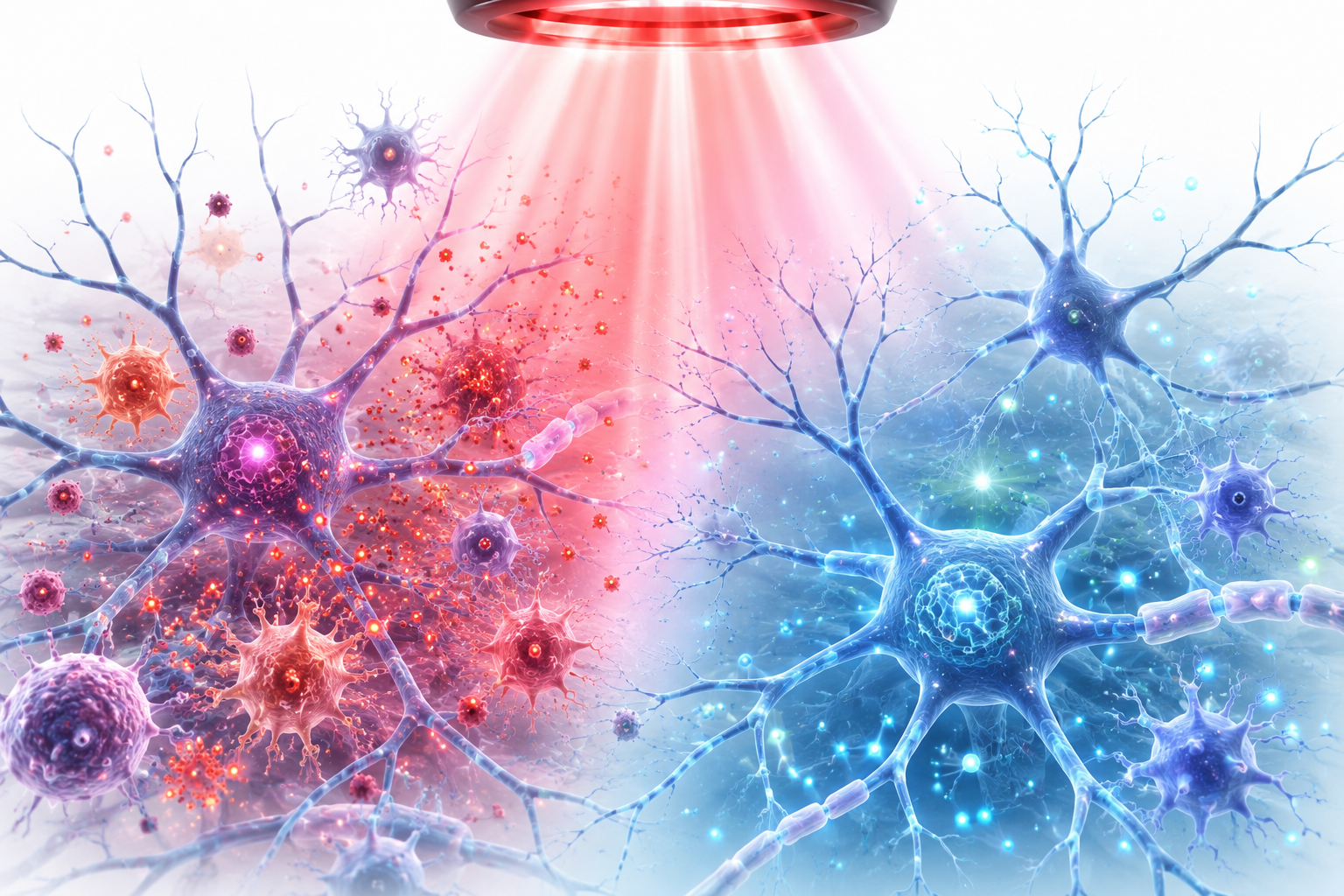
Neuroinflammation — low-grade inflammatory activity within the nervous system — has been identified as a factor in several neurodevelopmental conditions. Some research suggests that photobiomodulation may exert anti-inflammatory effects at the cellular level, though investigation in this area, particularly in paediatric populations, is still early-stage.
What Does Current Research Show?
This is the most important section of this article — and the one that requires the most care.
The evidence for photobiomodulation in neurodevelopment is genuinely promising in some areas, and genuinely limited in others. The distinction matters.
- Autism and Communication Research
Several studies have investigated transcranial photobiomodulation in children with autism spectrum disorder (ASD). In a number of these studies, researchers reported improvements in areas including attention, repetitive or rigid behaviours, and some communication-related measures — including social responsiveness and verbal engagement.
A notable example is the work of Naeser et al. and subsequent researchers working in transcranial PBM, who demonstrated measurable changes in functional outcomes following transcranial near-infrared light application in neurological populations. Studies specifically in ASD populations, while smaller in scale, have reported similar signals in behavioural and communicative domains.
However — and this is critical — these studies are predominantly small, lack large randomised controlled trials, and use varying protocols (wavelengths, dosages, session frequency, and target areas differ significantly across studies). Larger, well-controlled studies are still needed before firm conclusions can be drawn.
- Speech and Language Applications
A literature review examining photobiomodulation applications within speech-language pathology concluded that the field holds promise but requires standardised protocols and substantially more clinical research before it can be considered an evidence-based intervention for speech development specifically.
This is an honest assessment of where the field currently stands: interesting signals, insufficient evidence for definitive claims.
A notable example is the work of Naeser et al. and subsequent researchers working in transcranial PBM, who demonstrated measurable changes in functional outcomes following transcranial near-infrared light application in neurological populations. Studies specifically in ASD populations, while smaller in scale, have reported similar signals in behavioural and communicative domains.
However — and this is critical — these studies are predominantly small, lack large randomised controlled trials, and use varying protocols (wavelengths, dosages, session frequency, and target areas differ significantly across studies). Larger, well-controlled studies are still needed before firm conclusions can be drawn.
- Laser Acupuncture and Communication
Research involving low-level laser acupuncture — a modality that applies PBM at acupuncture points rather than transcranially — in children with autism and communication challenges has explored effects on language abilities, social engagement, and neurological biomarkers. Some studies reported measurable changes in language-related outcomes and biomarker activity.
Again, these findings are early-stage. They suggest directions for further investigation rather than established therapeutic protocols.
How Does This Compare With Neuro-Acupuncture?
It is worth briefly addressing how photobiomodulation relates to neuro-acupuncture — since both are sometimes explored within integrative neurodevelopmental care.
The two approaches differ in mechanism but share some conceptual overlap in their goals.
Neuro-acupuncture aims to support nervous system regulation and neurological rehabilitation through the precise stimulation of acupuncture points — using needles, electrical stimulation, or in some applications, low-level laser (laser acupuncture). It is grounded in both traditional acupuncture principles and contemporary neuroscience research into how peripheral stimulation influences central nervous system function.
Photobiomodulation works directly through light energy applied to tissue, with proposed effects at the cellular and neurological level as described above.
Both photobiomodulation and neuro-acupuncture are being investigated in part because researchers increasingly recognise the importance of neuroplasticity in communication development. The developing brain’s capacity to form and strengthen neural pathways is central to how children acquire language — and both of these approaches, through different mechanisms, are being explored for their potential to support that neuroplastic process. Both are considered complementary to established care. Both are used within broader, individualised treatment plans rather than as standalone interventions.
Both are also being investigated for their potential to support the kind of sensory processing and neuroplastic adaptation that underlies developmental progress. In clinical practice, these approaches are sometimes used together as part of an individualised integrative plan, rather than in isolation.
Who might consider discussing integrative neurodevelopment support?
- Children already receiving speech-language therapy whose families are exploring what complementary support might look like
- Families whose children have complex developmental profiles involving sensory processing, attention, or neurological factors alongside speech delay
- Children with ASD or other neurodevelopmental conditions where multidisciplinary input is part of the broader care plan
- Families seeking an integrative perspective that considers the nervous system’s role in development alongside established therapeutic approaches
If you are in Ottawa and would like to explore what an integrative pediatric neurodevelopment support plan might look like for your child, we are happy to have that conversation.
Frequently asked questions
Most children say their first words between 12 and 18 months and begin combining two words by age two. If a child is not using any words by 16 months, not using two-word phrases by 24 months, or loses language skills they previously had at any age, an assessment with a speech-language pathologist is recommended. Earlier assessment consistently leads to better outcomes — the neuroplastic window of early childhood is the most responsive period for language intervention.
Speech delay has many possible contributing factors. These include hearing loss or auditory processing differences, neurological or developmental conditions such as autism spectrum disorder or developmental language disorder, oral-motor difficulties affecting the physical production of speech sounds, environmental factors such as limited language exposure, and in some cases no identifiable single cause. This is why comprehensive assessment — rather than a single intervention — is the essential first step for any child presenting with delayed speech or language development.
Based on current research, low-level laser therapy and photobiomodulation are generally considered non-invasive and well-tolerated. The light intensities used in PBM are far below the threshold that would cause thermal tissue damage. However, safety data specifically in paediatric neurodevelopmental applications remains limited, and protocols vary significantly across research settings. Any use of photobiomodulation with children should be conducted by a qualified practitioner following an individual clinical assessment — not applied based on general information alone.
Study protocols vary considerably, which is one of the reasons the field lacks standardised guidelines. Research studies have used anywhere from 6 to 24 sessions, typically delivered two to three times per week over several weeks. Session duration ranges from a few minutes to approximately 20 minutes depending on the wavelength, target area, and device used. Until larger trials establish consensus protocols, there is no universally accepted treatment schedule.
Several small studies have reported promising signals in autism populations — including improvements in attention, behavioural rigidity, and some communication-related measures. However, these studies are preliminary, involve small sample sizes, and use varying methodologies. The evidence is not yet sufficient to draw firm clinical conclusions. Photobiomodulation should be considered an area of active research rather than an established intervention for autism or communication challenges specifically.
Photobiomodulation is not a replacement for speech-language therapy and should not be framed as one. Speech-language therapy remains the most consistently evidence-supported intervention for speech and language development. Emerging approaches such as PBM are best understood as potentially complementary — meaning they may, as research develops, support the neurological environment in which therapeutic work takes place. For families in Ottawa exploring integrative options, the starting point should always be a qualified speech-language pathologist and a structured developmental plan.
Exploring Integrative Neurodevelopment Support in Ottawa
For families in Ottawa navigating speech delay, a few principles guide how we approach integrative neurodevelopmental support at our clinic:
Speech-language therapy is the foundation. Any integrative approach we discuss is considered in addition to — never instead of — established speech and language intervention. We work alongside speech-language pathologists, not independently of them.
Every child receives an individualised assessment. Speech delay presents differently in every child. The contributing factors, the developmental profile, and the most appropriate support plan vary significantly from one child to the next. There is no universal protocol.
Emerging approaches are discussed honestly. We follow the research. Where evidence is strong, we say so. Where it is preliminary — as with photobiomodulation specifically — we say that too. Families deserve accurate information, not overstated promises.
Treatment plans are built around the child’s whole picture — developmental history, neurological profile, family context, and existing therapeutic relationships.
💡 Remember
Recovery is not a straight line. There will be good days and challenging days. What matters is consistent effort, appropriate support, and the courage to explore treatments that might help you reach your fullest potential. Neuroacupuncture is one more tool in your recovery toolkit—a tool backed by thousands of years of clinical experience and increasingly by modern research.
Scientific References
- Hamblin, M.R. (2016). Shining light on the head: Photobiomodulation for brain disorders. BBA Clinical, 6, 113–124. View study →
- Salehpour, F. et al. (2018). Brain photobiomodulation therapy: A narrative review. Molecular Neurobiology, 55(8), 6601–6636. View study →
- Ahrari, F. et al. (2022). Effects of photobiomodulation therapy on autism spectrum disorder: A systematic review. Photobiomodulation, Photomedicine, and Laser Surgery, 40(3). View study →
- Lam, F.M.H. et al. (2015). The effect of transcranial laser therapy via low-level laser on cognitive function in older adults: A randomized controlled trial. Journal of the American Geriatrics Society. View study →
- Naeser, M.A. et al. (2014). Significant improvements in cognitive performance post-transcranial, red/near-infrared light-emitting diode treatments in chronic, mild traumatic brain injury. Journal of Neurotrauma, 31(11). View study →
- Zhang, Y. et al. (2025). Global research hotspots and trends of acupuncture regulating neuroplasticity: bibliometric analysis 2005–2024. Frontiers in Neurology. View study →
- Yoshinaga-Itano, C. et al. (2017). Early intervention and language development in children who are deaf and hard of hearing. Pediatrics, 139(3). View study →
- Kuhl, P.K. (2010). Brain mechanisms in early language acquisition. Neuron, 67(5), 713–727. View study →
This article is for informational and educational purposes only and is not a substitute for professional medical advice, diagnosis, or treatment. Always seek the advice of your physician or other qualified health provider with any questions you may have regarding a medical condition. Never disregard professional medical advice or delay in seeking it because of something you have read in this article.
Table of Contents
About Denis Grounin →
Denis Grounin, former ER nurse practitioner, R.TCMP, R.Ac, is the Founder of Sunrise Neuro Acupuncture Integrative Clinic in Ottawa with over 30 years of acupuncture experience and neurological training since the 1990s. His work focuses on neuro-acupuncture, rehabilitation support, and integrative neurological care.
Read more related articles & case studies
- All
- Gastrointestinal
- Infections
- integrative medicine
- Mental
- Musculoskeletal
- Neurological
- Skin
- Women's Health
How Common Are Sensory Processing Difficulties in Children?

Low Back Pain Treatment in 2026: What Research Now Shows
What Is Neuroplasticity? The Brain’s Ability to Adapt
Looking for a treatment?
Experience the benefits of Traditional Chinese Medicine with personalized care for your health.